Showing posts with label economy. Show all posts

Saturday, July 16, 2011

Eight European Banks Fail

European Banking Authority, the European Banking Authority (EBA), the pressure test conducted on 90 banks in the region. According to AP and AFP on Saturday (07/16/2011), the results of these tests showed eight banks failed.

Meanwhile, according to the EBA, from number 90 the bank said, there are 16 banks that fall into the danger zone of the financial crisis. EBA requested that the national financial regulators can ensure the bank's capital.

The eight banks that fail that test is 5 from Spain, 2 in Greece, and an Austrian bank. Earlier on Wednesday, the Bank Helaba Germans had withdrawn from the pressure test that could be deemed included in the banks that failed in the test pressure.

EBA in the announcement of the eight banks are clearly named and the owner of the bank failing to pressure test. In Austria, Volksbank Oestereichische declared a failure. Meanwhile, in Greece, two government-owned bank EFG Eurobank-ATEbank and also declared a failure.

Meanwhile, the Spanish bank that failed is the Caixa Catalunya, Father, Unnim, Caja3, and CAM. Seven others are still done the pressure test.

Although many banks in Spain that have failed the test, the Central Bank of Spain Governor Miguel Angel Fernandez Ordonez said no need to inject funds into banks is because they are middle restructured.

After the announcement of this EBA, Central Bank of Portugal said the two state banks will be immediately strengthen their finances. Banco Comercial Portugues, Portugal's largest bank, and Espirito Santo Financial Group will strengthen its capital within three months. Banks in Portugal are also experiencing a crisis that must be injected liquidity assistance amounting to 78 billion euros.

The announcement of the test pressure on banks in Europe also came out just a day after the Italian parliament approved the package of savings amounting to 70 billion euros. Italian banking itself passed the pressure test with a considerable margin.
Tuesday, July 12, 2011

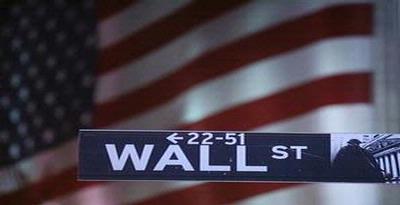
Dow Jones Hit by Crisis Euro Zone

NEW YORK - U.S. stocks tumbled on Monday as market concerns on the worsening debt crisis adds to Europe so the market downturn that has hit hard on Friday by a dismal U.S. economic data. The Dow Jones Industrial Average closed down 151.44 points (1.20 percent) to 12,505.76.

S & P 500 shed 24.31 points (1.81 percent) to end at 1319.49, while the Nasdaq composite index fell 57.19 points (2.00 percent) to 2802.62. It follows a sharp fall in European markets because of political leaders and bankers in the debt talks continue to disagree Greece on how to prevent the default (default) as well as by Athens, and because of concerns have also spread to Italy which owes a lot.

The announcement on Friday that the U.S. economy has produced almost no new jobs in June, and that the unemployment rate rose to 9.2 percent, also continue to weigh on investor sentiment. All 30 Dow blue chip stocks are in red, and the big banks hit hard, namely Bank of America lost 3.3 percent, JPMorgan Chase fell 3.2 percent, and Citigroup fell 5.3 percent.

Thursday, June 23, 2011

England Refuse Help Greek Economy


The British government said it would not spend a dime of taxpayer money to help the Greek economy was helter-skelter. This will be delivered the Prime Minister of Britain, David Cameron, in the presence of EU leaders this weekend.

It is delivered Cameron, quoted from the pages of The Telegraph, Tuesday, June 21, 2011. He said that Britain would not participate with other European countries in providing bailouts (bailout) to Greece.

The plan, eurozone countries would provide a bailout to Greece by 12 billion euros or about Rp148 billion to tackle inflation in Greece. Britain is not part of the 17 eurozone countries has no say in Greek bailout.

However, the British Finance Minister Mark Hoban told Cameron that Britain will inevitably participate in providing some funds for Greece. This is because English is one of the largest shareholder in the IMF, which incidentally is one of the pioneers of aid for Greece.

"I do not think we need to intervene. It will not and I will fight for the British position in the European Council this week," said Cameron.

Basically, European finance ministers refused to provide a bailout if Greece can not afford to implement austerity measures amounting to 28 billion euros.

The Greek government is currently fighting for the ratification of austerity measures by the parliament. If enacted, it means that taxes will be raised and the budget cuts imposed.

Wednesday, May 18, 2011

Economic Recession Affect Fertility Rate In U.S.

ATLANTA - Number of births in the U.S. fell in 2010, possibly due to the recession. One exception to this trend is the number of births among women aged 40s, who may feel unable to wait until the economy improves.

Birth rate for women aged early 40s are surprisingly up 4% from the previous year, reaching its highest rate since 1967. While the birth rate for women in the late 40s also increased slightly.

But the birth rate for teenage mothers, and women in the 20s and 30s year, down.

"The women delaying birth until the end of the ages, above 40," said James Trussell, director of the Department of Population Research at Princeton University.

The experts do not know exactly why so many are delaying having children, though some suspect the economy becomes a big factor. However, "you reach a point where biological clock started ticking and the people realize that they have to do it," says Trussell, who was not involved in the research.

The new report of birth issued on Tuesday (17 / 5) by the Center for Disease Control and Prevention (CDC). The report was based on a review of more than 99% of birth certificates for 2008 - the first full year of recession. Overall, about 4.2 million babies born that year, down 2% from 2007. It was the first annual decline of birth rate since the start of this decade.

Experts say the most likely explanation is the recession and the decline in immigration to the United States, which has been widely blamed for the weak jobs market.

Some early birth information for the first six months of 2009 indicate a continuation decline of about 3% of total births.

Last summer, the agency gave the first footage from the 2008 figure. The new report confirmed the declining birth rate, and also provide details of births by age group.

The new report found that birth rates fell 3% for women in the early 20s, 2% for women in her late 20s, and 1% for those aged 30 for years.

Trends for these figures indicate that the older woman, the more reluctant they are to delay the birth, said lead author of the report, Brady Hamilton of the Center for Health Statistics CDC.

Teen birth rate declined by 2% - and the figures for Hispanic teens reported the lowest in two decades. Teen birth rate has declined since 1991 to 2005, but rose from 2005 to 2007. The new data indicate the increase was over.

However, the number of women in the 40s years of age who gave birth is still much less than women whose age was younger. The figure is about 10 births per 1,000 women in their early 40s years, and less than one per 1,000 for women in the late 40s.

Birth rate for women in their 20s end is 115 per 1,000, while for adolescents was 41 per 1,000.

Meanwhile, the Pew Research Center also released a report which found that some states with the largest decline in birth rates - such as Arizona, Florida, and California - were among those who fared worst with a variety of economic measures. The organization also pointed to a survey in 2009 which found that 14% of the people who are in golden years of pregnancy said that they were delaying having children because of the recession.

Experts say that the theory of delay may explain why the younger women have a lower birth rate in the CDC's findings, but may not explain the decline in teen birth rates. It also does not explain why the birth rate for older women rose so sharply.

Some speculate that the services of more sophisticated assisted reproduction may have resulted for couples who are older, or maybe some divorced women who choose to have additional children with his new partner.

New CDC report also shows that the percentage of babies born prematurely fell slightly, from 12.7% to 12.3%, a development hailed by some advocates of birth.

From 1990 to 2006, the U.S. witnessed an increase of 20% of the preterm birth rate - a trend that is worrying because it is more fragile preterm infants. The experts believe that premature birth is the main reason the U.S. infant mortality rate is higher than most European countries.

Monday, May 16, 2011

Germany Planned Buy List State Tax Embezzlement


BERLIN - German Chancellor Angela Merkel, said he would buy a list of alleged tax evasion that was mentioned has been hiding money in Switzerland, if that's true.

Some 1,500 German citizens are alleged to have hid the money of millions of dollars in secret bank accounts abroad to avoid taxes.

The Financial Times Deutschland reported that the data offered by an information technology specialist who has worked at HSBC Geneva. Mentioned that he asked for 3.5 million dollar reward to the list of names.

Such data could allow the German government to obtain redress in a much larger amount of unpaid taxes.

However, the Swiss finance ministry said it had refused to give any German assistance in relation to the document, saying that it was based on stolen information.

In the Davos economic forum, Swiss Finance Minister Doris Leuthard said that a general principle, evidence obtained by illegal means is not acceptable.

By violating this principle, Leuthard said that Germany would encourage the theft of data in a professional manner. Swiss Defence Minister Ueli Maurer said that confidence Switzerland against Germany will falter if the state is buying the stolen data.

"Everything must be done to get this data," said Merkel at a press conference in Berlin, during the relevant information.

Two years ago, the German pay seven million dollars for a similar list of German citizens who had money in Liechtenstein, a country known as a tax haven. At that time, the list of Liechtenstein bank clients from the two given to the German, U.S., and other tax authorities, by a former employee of the bank.

A number of wealthy Germans were raided by the police when they were exposed tax evasion action, and some parties in Liechtenstein protested angrily over damage to the sector's most profitable, operate secret bank accounts.

At that time, German intelligence agencies have been supporting the government to buy the stolen bank account data.

The information was revealed some top names of tax evasion, including Klaus Zumwinkel, former head of Deutsche Post. He was given a reprieve in jail for hiding one million pounds. German politicians split on whether to buy the new list.

Some members of Merkel's coalition argued that any right to deal with stolen goods. Others said it would be a scandal if not eliminate the tax evasion.

The decision to buy the list will depend on how much can be expected the government to recoup the tax payment. Finance ministry also said that they need to clarify the legality of buying and using stolen data. Two German newspapers reported on Saturday that the data five tax fraud has been given to the government as free samples to verify the information.

The newspaper Frankfurter Allgemeine Zeitung (FAZ) and the Sueddeutsche Zeitung reported that the data has been offered to tax collectors in the state of North Rhine-Westphalia.

The official tax collectors say that it is up to the state government, which collects taxes in Germany, not the federal government to decide whether to buy the data.

New York Times reported on 18 January that the data offered to the German government by a former executive at Swiss bank. It is not clear whether he is the source of the data.

Germany, U.S., and many other countries require taxpayers to declare their income throughout the world each year, but in the past conceal income in foreign banks not a difficult thing.

Monday, May 9, 2011

Abraaj Capital Gain First rankings


SINGAPORE - Abraaj Capital, the leading private equity has focused on the Southeast Asia market, has been named as the top private equity group in the emerging markets of the world.

This achievement puts Abraaj Capital is ranked number one in the ranks of Private Equity Asia that carries the top 30 companies with operations in Asia. Moreover, Abraaj Capital also ranked 48th of all private equity firms in the world, according to Private Equity International (PEI), leading magazine for private equity industry, based in London.

"The key to our success for the investors based on in-depth knowledge of major markets will trend growth in a dynamic Asia. For that, in each portfolio, we will always carry a thorough understanding of each character - each market, a holistic approach to each stakeholder and to provide more strategic value. This achievement is evidence of the success of the performance of this approach as long as we believe can strengthen the foundation of our growth and evolution to the next stage, "said Omar Lodhi, Senior Partner and Chief Executive Officer of Abraaj Asia Pte Ltd in a press release on Saturday (7 / 5 / 2011).

Abraaj Capital, which has recorded a total of $ 6, 2 billion within five years, is the only group of private equity in the global rankings and top 50 are from outside North America and Europe. During this period, Abraaj Capital funds raised a total of $ 1 billion, larger than its nearest competitor in the emerging markets of Asia.

"Named as number one group of private equity in emerging markets the world have confirmed the long-term focus of the company to continue to identify companies that match our strict investment criteria as well as opening opportunities for their growth potential, which in turn will provide significant added value for investors us. These ratings also prove that the potential in emerging markets today, including the Middle East, North Africa, and several regions in South Asia, where we will continue the commitment to become number one. "Said Mounir Husseini, Senior Partner and Head of Coverage Abraaj Capital.

As information, Abraaj Capital is the largest private equity group in the Middle East, North Africa, and South Asia (MENASA). After standing in 2002, Abraaj Capital has reached nearly $ 7 billion and distributed nearly $ 3 billion to investors. Headquartered in Dubai, Abraaj Group operates 10 branch offices in regional areas, including Istanbul, Cairo, and Riyadh. Funds managed by Abraaj Group Group or its predecessor agencies have made 36 investments in 11 countries and have over 20 exits.

More than 75 world class professionals working in the field of investment for Abraaj Capital, and manages seven funds: four of purchase funds, Riyada Enterprise Development Fund (a special fund for small and medium enterprises), Principles (increased income, sales and leaseback funds), and real estate funds. Funds managed by Abraaj Group has had a holding in about two dozen regional companies, including Air Arabia, the leading low-cost airline, Acibadem Healthcare Group, the largest private hospital operator owned by Turkey, and Al Borg Laboratory, the largest private medical testing laboratory in the Middle East .

Abraaj Capital has won many awards both regionally and internationally, including named for five consecutive years as the 'Middle Easter Private Equity Firm of the Year "by Private Equity International in London. Abraaj Capital Ltd., A member of the Abraaj Group, has been licensed by Dubai Financial Services Authority. Abraaj Group is also the associate member of the European Venture Capital Association.

Warren Buffett company profit sinks


NEW YORK - Warren Buffett's company-owned conglomerate, Berkshire Hathaway Inc. reported first-quarter decline in profit this year because the number of reinsurance claims caused by the earthquake and tsunami Japan.

As quoted by Reuters, in the first quarter of 2011, Berkshire's net profit amounted to USD1, 51 billion or USD917 per share. While in the first quarter of 2010, net profit recorded a profit of insurance companies is USD2.722 per share.

But, in the quarterly report, the company at all regarding the resignation of Executive David Sokol Bekshire who had created a scandal in Berkshire and encourage the SEC investigation.

The company was issued a provisional registration for USD1, 7 billion in the first quarter to pay for losses due to earthquakes in Japan, also to cover losses in New Zealand earthquake and floods in Australia.

Buffett, who is the third richest person in the world also seems to have suspected his company's financial performance will decline.

In addition, Berkshire also recorded a loss USD506 million in the first quarter to decline in value of corporate investments in shares. The biggest contribution of this impairment is the decline in value of Berkshire shares in Wells Fargo, as well as Kraft Foods stock price declines.

Sunday, May 8, 2011

Lakshmi Mittal, Britain's richest earned 7x Successive


LONDON - Indian-born steel tycoon businessman Lakshmi Mittal maintains the top position as the richest man in Britain for the seventh time, despite their wealth down to five billion pounds.

Wealth Mittal, which is generally obtained from the world's largest steel company based in London, ArcelorMittal fell approximately 22 percent to 17.5 billion pounds in the last 12 months. This is the biggest drop in this year's list.

The largest decline in wealth in 60 years was driven by the decline in stock prices of ArcelorMittal as a result of the global steel industry is struggling to cope with expensive raw materials and slowing demand.

AFP quoted from The Sunday Times, Monday (05/09/2011), the total wealth of rich people in Britain are known to reach 18 per cent of the UK. Britain's richest 1,000 people saw their wealth continues to increase and their total assets amounted to 395.8 billion pounds.

The number of millionaires in Britain today is 73 people, an increase when compared to last year that as many as 53 people. Nearly matching the 75 specified in the list of 2008 before the financial crisis. Meanwhile, England was born carrying some 40 people.

Then Russian businessman Alisher Usmanov moved from sixth place to second place in the list after adding its assets grew 7.7 billion euros so that their wealth to 12.4 billion pounds.

Usmanov has a large share of ownership in the Russian iron and steel company Metalloinvest. And recently, Usmanov tried to become the controlling shareholder of English football club, Arsenal.

Women entrepreneurs from China Xiuli Hawken, 48 years old, ranked 61st. He's changing military shelters underground in China into an underground shopping center. As a result, the wealth of women living in London is recorded at 1.06 billion pounds.

Other women entrepreneurs is Mary Perkins, who founded the chain of eyeglasses stores, Specsavers with her husband Douglas. Their wealth increased 42 percent since last year to 1.15 billion pounds.

Billionaire wealth is increased when England face the budget saving measures proposed by the coalition to reduce the record deficit in Britain.

List of richest people is based on identifiable wealth such as land, property or shares in public companies, and excludes bank accounts.

Here is a list of 10 billionaires as reported by The Sunday Times Rich List 2011,

1. Lakshmi Mittal, steel entrepreneur with assets 17.51 ​​billion pounds. Previously also occupies the first position.

2. Alisher Usmanov, steel entrepreneur with assets of £ 12.4 billion. Previously she was in sixth position.

3. Roman Abramovich, the oil business and industrial property derivatives with 10.3 billion pounds. Previously ranked second.

4. Duke of Westminster, property entrepreneur with a wealth of seven billion pounds. Previously was ranked third.

5. Ernesto and Kirsty Bertarelli, employers in the pharmaceutical sector with assets 6.87 billion pounds. Previously there at four positions.

6. Leonard Blavatnik, industrial entrepreneurs with assets 6.237 billion pounds. Previously he was at position 15.

7. John Fredriksen and families, businessmen who own property shipping 6.2 billion pounds. Earlier in the top 16.

8. David and Simon Reuben, property and internet entrepreneur with assets 6.176 billion pounds. Previously he was ranked fifth.

9. Gopi and Sri Hinduja, employers in the financial sector with the price of six billion pounds. He had entered into the richest man in Britain.

10. Galen and George Weston, retailers with assets of six billion pounds. Previously she was in seventh position.